How do you really make things easy on yourself?

There’s always two ways to look at it, what are we fighting the external or the internal. Many people say things happen to you for a reason, to teach you lessons, which is true to an extent, however, if you don’t have the energy, and the mental capacity to be able to Regulate your emotions, see things in a different perspective and navigate through stress. Sometimes they won’t feel like a positive challenge, or something that you have to learn.

The important questions is, even if something is very toxic, is there still something to learn from it, I guess so? Sometimes if we feel that the stress or external force was uninvited, then it can feel exhausting. However, if it’s a case of irrational beliefs, beating yourself up, negative thinking, this is something that is also a journey, or something we have to learn about ourselves, especially through observation of our thoughts and behaviour. So how do we make it easier for ourselves in regards of a long term basis, basically where we build our emotional skills and explore our bodies to work for us not against us

So there are five stages, initially that you can look at to help you regardless if it’s an external battle or an internal one. These five stages, breakdown dynamics of emotions and the internal self. The first stage is called sensitivity, second is surrender or release. The third one is stillness, the forth one is stability and the fifth one is sustain.

Fundamentally sensitivity is looking at how you respond and process your emotions, the second one is to release stagnant feelings and emotions and finding what relaxes you and observing yourself, probably one of the hardest but essential skills to have. The third one is learning to ground your body, find calmness and relaxation on a continuous level, even through high levels of stress, then the next one is where you start to find composure and strength and the upkeep of the skills of your internal nervous system, mind and response to the outside world, and then finally sustaining all the other four and recycling these, and nurturing them, and then going back to the different stages when need be.

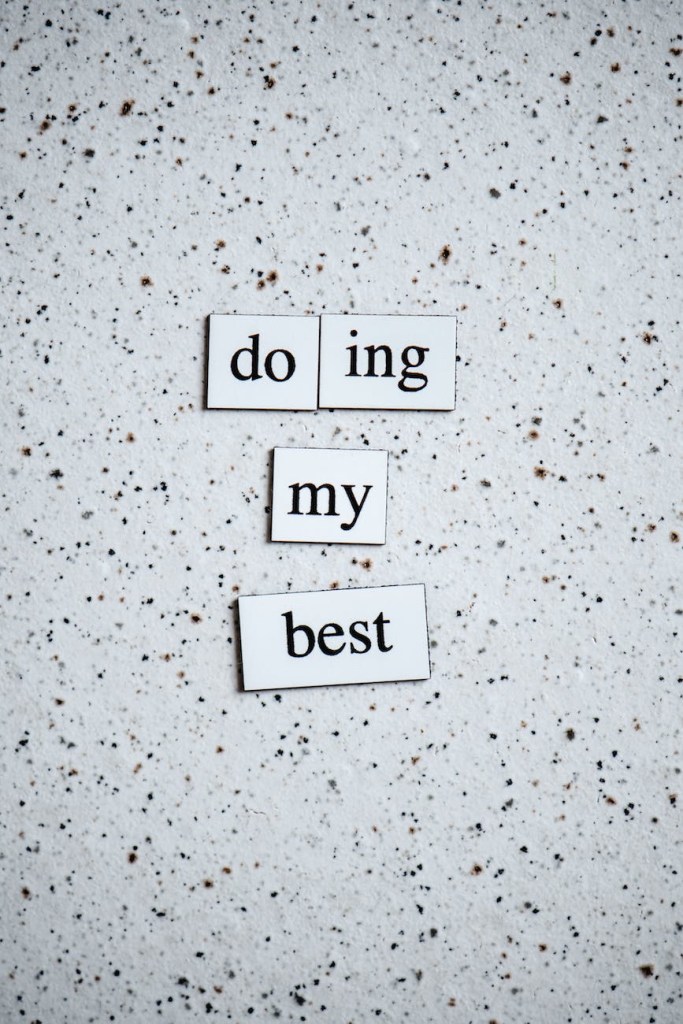
When your best is not good enough

Sometimes, we are good when we want to be, and not when we need to be, what do I mean by this. You could feel that you’ve given your best, however, sometimes externally the validation or thoughts from others may not agree, I.E your manager etc, or internally your own thoughts, but it is important to remember that what you give at that moment is all you can give. Yes, there can be areas I’m sure improvement is needed and anyone that sees that in you will nurture that and you will see that in yourself at some point. But you should not feel guilty for not doing better when your giving all you got

There is more critical talk on improving than enjoying the process. There is more frustrating conversations around people not meeting the end result plus not being met quick enough as opposed to the joy of the journey and what we can do done better as a collective.

If you feel you could have done better and you still learnt for the mistake, error or shortcoming then it’s all good. No problem there. Delivering your best can change in certain periods in your life. You could be consistent then one phase you may not be. That’s ok. If your energy levels, interest or enthusiasm change over time then that’s ok. That’s organic. That’s realistic and healthy. No amount of pressure should be applied. Just being aware of it is enough. One day you might go back to consistency but it shouldn’t be the goal.

We are already enough, we are at our best even when we don’t deliver. Like my great auntie said. If you got then give, but if you don’t have it don’t give it. Don’t overdo!

Using your gift of sensitivity

It is often said that being sensitive is a weakness, can confuse you and sometimes make rushed and bad decisions which is true to an extent, however sensitivity is actually a gift. When we learn more about our sensitivity levels which are different for everyone we are able to use them in a constructive way. Never feel that your sensitivity responses are negative. They just need fine-tuning.

They say there’s a percentage of people that are overly sensitive, and respond to life with a negative perception, they call this neuroticism. Neuroticism is one of the five personality traits of the population. However, these are not all bad, it’s the labels society give and the way these traits are interpreted, which in turn create a certain language that sounds like these percentage of people are all doom and gloom. However, this is not the case.

Being responsive, receptive, empathetic, and more in tune and aligned with your nervous system, and your emotional undercurrent’s is a gift

Sometimes you may feel that it’s too much mentally or physically but over time once you nurture and understand more of yourself, you would find that the sensitivity levels you have are just right. They just need to be understood, and worked with

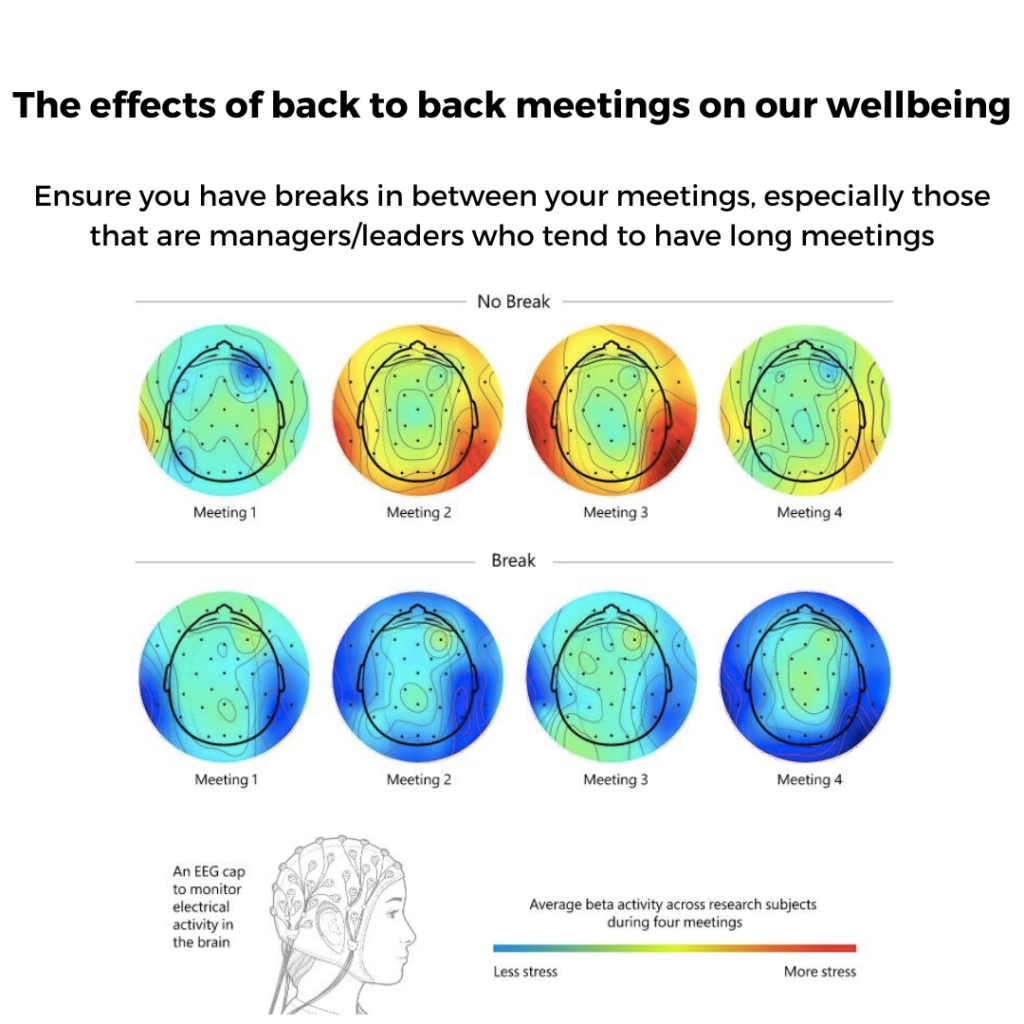
The effect of having back to back meetings on our wellbeing

Over the last few years, with a lot of jobs now going virtual, and working from home and with the raise of Zoom and Microsoft teams. It has created more and more meetings that are now back to back, especially for anyone in a leadership, management role. Don’t get me wrong virtual communication platforms are amazing. However, we need to be more conscious of the time we spend on them.

A number of staff predominately management have made complaints in regards to the length of meetings and having meetings that are back to back without the chance of having breaks. Staff now are more comfortable with the term I’mhaving a ‘working lunch’ which is becoming a norm. However, this working lunch is not healthy at all. We need dedicated time and space to come away from work. Sometimes staff are so engrossed in working to deadlines and timeframes, they are afraid to take a lunch break, even if it’s for 30mins, and we know how fast 30mins can go when having lunch. By the time you take your phone out and have a nibble it’s time to go back to work. However its important you take this break.  

Its self-care week this week in November and I’ve been encouraging staff to take that time away from the workstation. It’s essential we come away from work and have the break we deserve. The work will always be there, but it’s like we are programmed that we don’t have enough time in the day. Don’t get me wrong I am no stranger to this, and after a burnout I realised for once how fast we are working. We have to make our breaks a priority. We have to demand them at work and promote your self-care break time at work. Management tend to mention to me that there isn’t enough time in the day, I’venever understood this concept as you always have the next day if things are not complete. Furthermore if they are not complete it’s a process of time management, and I don’t mean working after work hours. 

It’s going to need you being selfish with your time, placing boundaries and looking at your capacities at work. Being honest with work and not feeling ashamed or pressured by work to deliver when you actually need a break. The amount of stress this causes in the long run is dangerous to our wellbeing. Since its self-care week let’s start this month to slow down and think more proactively in regards to our meetings.

How do you set healthy boundaries

Learning how to set boundaries, is something that we learn to build and understand over a longer period of our lives. It can take time to set and understand our own boundaries, so you can see it as self exploration. Setting boundaries is not just your likes and dislikes, your do’s and don’t’s, understanding what triggers you. At the core of things they are understanding what are your capacities, your energy levels, your sensitivity levels.

Setting healthy boundaries is not about being disagreeable for no reason. It’s more understanding how much you can give at that particular time in your life or that moment. However there is also setting boundaries for those that are trying to delegate or force you in a abusive way. For example, some people can sometimes overstep your boundaries unintentionally due to them being stressed or unreasonable due to distress in their own lives. This is where it is good to see and know the difference in the people we work close with at work or friends and family.

As we grow and our lifestyle and responsibilities change our boundaries will need to change too. Therefore it is important to set practical standards and realistic ideas for how much we can give and take on. Not being afraid to upset people with our boundaries. Clear communication will benefit everyone in the long run regardless how we take it. Boundaries that are set with good intentions and insight to your capacities are the best thing you can do when engaging with people. They are great for your psychological well-being and safety and encourage respect and appreciation for your contribution to the relationship