Dropping the heavy burden

I remember anger being such a heavy emotion for me. I was holding it for 10years or more. At first I didn’t even know I was holding onto it. Luckily a colleague was brave enough to mention it to me after some time of knowing him. Even my closet friends saw it within me but never brought it up. It’s hard to address when you don’t know others will react. However what my colleague told me more importantly was that I affecting my loved ones

What happened in that moment of feedback, clarity, awareness was a deep reflection of how I was affecting others and myself. It was a start of surrendering and releasing this emotion that one I didn’t even know was affecting others but two was so powerful but yet subtle and quiet to my understanding. It felt like it was a part of my personality, it was what I was used to.

Now it took another 3-4 years to actually start seeing the release and surrender of this emotion. It was a journey of inner peace and compassion for my difficult pass. It was the reason why I called Benucation Benu. It felt that way. I felt like a new person. It wasn’t easy but I’m grateful for that one person who advised me unintentionally I guess. Once I unblocked that held and powerful emotion I could finally rest in myself enjoying the moments and dealing with other difficulties in a whole new way.

I noticed anger in others, the resentment that is built up over every interaction and disappointment and disrespect. Which again is all logical and normal. We have boundaries crossed and we have the right to be upset or frustrated. However, it’s what we do with it next which is fundamentally important. How long does it linger in the emotional body. How long do we hold grudges and judgement slowly making us serious and on edge.

Releasing the burden takes its own time. It can be long or short but there’s no rush to it no matter how much it hurts. It has to have its own timing to be processed properly within the body and the mind. Getting comfortable with the emotion, situation, and yourself

How do you really make things easy on yourself?

There’s always two ways to look at it, what are we fighting the external or the internal. Many people say things happen to you for a reason, to teach you lessons, which is true to an extent, however, if you don’t have the energy, and the mental capacity to be able to Regulate your emotions, see things in a different perspective and navigate through stress. Sometimes they won’t feel like a positive challenge, or something that you have to learn.

The important questions is, even if something is very toxic, is there still something to learn from it, I guess so? Sometimes if we feel that the stress or external force was uninvited, then it can feel exhausting. However, if it’s a case of irrational beliefs, beating yourself up, negative thinking, this is something that is also a journey, or something we have to learn about ourselves, especially through observation of our thoughts and behaviour. So how do we make it easier for ourselves in regards of a long term basis, basically where we build our emotional skills and explore our bodies to work for us not against us

So there are five stages, initially that you can look at to help you regardless if it’s an external battle or an internal one. These five stages, breakdown dynamics of emotions and the internal self. The first stage is called sensitivity, second is surrender or release. The third one is stillness, the forth one is stability and the fifth one is sustain.

Fundamentally sensitivity is looking at how you respond and process your emotions, the second one is to release stagnant feelings and emotions and finding what relaxes you and observing yourself, probably one of the hardest but essential skills to have. The third one is learning to ground your body, find calmness and relaxation on a continuous level, even through high levels of stress, then the next one is where you start to find composure and strength and the upkeep of the skills of your internal nervous system, mind and response to the outside world, and then finally sustaining all the other four and recycling these, and nurturing them, and then going back to the different stages when need be.

When your best is not good enough

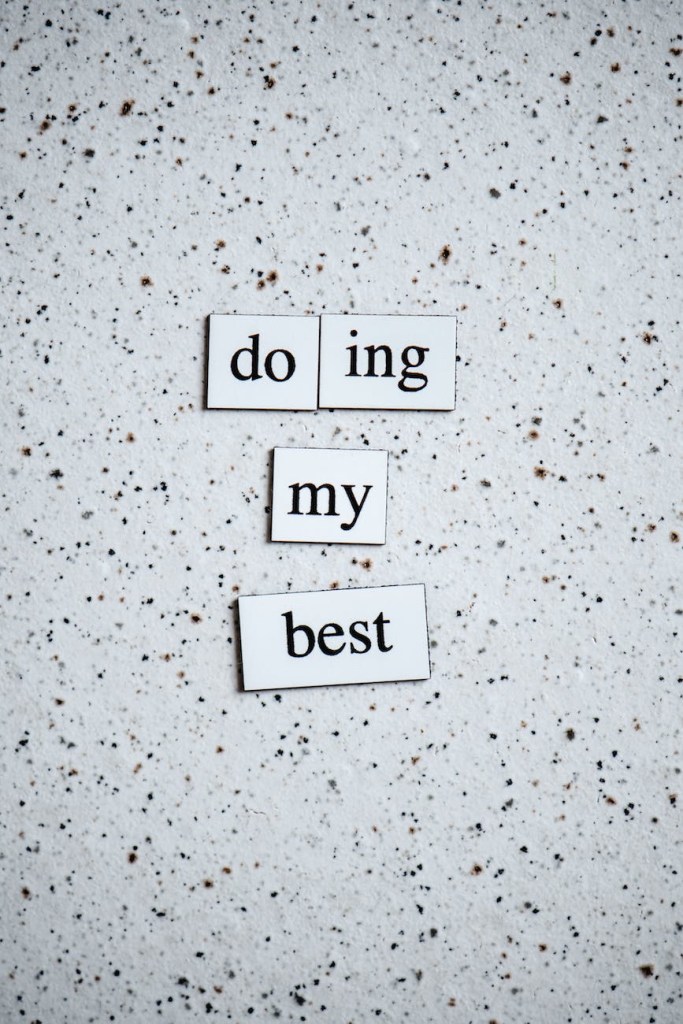
Sometimes, we are good when we want to be, and not when we need to be, what do I mean by this. You could feel that you’ve given your best, however, sometimes externally the validation or thoughts from others may not agree, I.E your manager etc, or internally your own thoughts, but it is important to remember that what you give at that moment is all you can give. Yes, there can be areas I’m sure improvement is needed and anyone that sees that in you will nurture that and you will see that in yourself at some point. But you should not feel guilty for not doing better when your giving all you got

There is more critical talk on improving than enjoying the process. There is more frustrating conversations around people not meeting the end result plus not being met quick enough as opposed to the joy of the journey and what we can do done better as a collective.

If you feel you could have done better and you still learnt for the mistake, error or shortcoming then it’s all good. No problem there. Delivering your best can change in certain periods in your life. You could be consistent then one phase you may not be. That’s ok. If your energy levels, interest or enthusiasm change over time then that’s ok. That’s organic. That’s realistic and healthy. No amount of pressure should be applied. Just being aware of it is enough. One day you might go back to consistency but it shouldn’t be the goal.

We are already enough, we are at our best even when we don’t deliver. Like my great auntie said. If you got then give, but if you don’t have it don’t give it. Don’t overdo!

How do you set healthy boundaries

Learning how to set boundaries, is something that we learn to build and understand over a longer period of our lives. It can take time to set and understand our own boundaries, so you can see it as self exploration. Setting boundaries is not just your likes and dislikes, your do’s and don’t’s, understanding what triggers you. At the core of things they are understanding what are your capacities, your energy levels, your sensitivity levels.

Setting healthy boundaries is not about being disagreeable for no reason. It’s more understanding how much you can give at that particular time in your life or that moment. However there is also setting boundaries for those that are trying to delegate or force you in a abusive way. For example, some people can sometimes overstep your boundaries unintentionally due to them being stressed or unreasonable due to distress in their own lives. This is where it is good to see and know the difference in the people we work close with at work or friends and family.

As we grow and our lifestyle and responsibilities change our boundaries will need to change too. Therefore it is important to set practical standards and realistic ideas for how much we can give and take on. Not being afraid to upset people with our boundaries. Clear communication will benefit everyone in the long run regardless how we take it. Boundaries that are set with good intentions and insight to your capacities are the best thing you can do when engaging with people. They are great for your psychological well-being and safety and encourage respect and appreciation for your contribution to the relationship