Emotions are an integral part of our human experience, yet we all process them uniquely. Some of us bottle them up, while others brood over them. Understanding how we manage our emotions is crucial for our mental well-being. Today, we dive into two common emotional styles: bottling and brooding, and how to navigate them effectively.
The Bottler: Keeping Emotions Locked Away
Bottlers often suppress their feelings, viewing emotional expression as a vulnerability. They might avoid emotional conversations, dismiss their own emotions, and even experience physical symptoms like headaches due to unprocessed feelings. This emotional style can lead to difficulties in forming deep connections with others and may manifest in passive-aggressive behavior.
The Brooder: Dwelling on Emotions
Brooders, on the other hand, tend to replay their emotions and situations in their minds, often leading to a cycle of overthinking and anxiety. This constant rumination can hinder problem-solving abilities and contribute to negative self-talk, increased anxiety, depression, and sleep disturbances.
Identifying Your Emotional Style
Recognising whether you’re a bottler or a brooder is the first step towards managing your emotions effectively. Ask yourself:
Do I avoid expressing my emotions?
Do I replay negative events in my mind?
Do I struggle with anxiety or holding grudges?
Acknowledging your tendencies can help you adopt healthier coping strategies.
Strategies for Emotional Management
For Bottlers:
Practice Emotional Expression: Start by sharing your feelings with someone you trust.
Journaling: Write down your thoughts to help process them.
Mindfulness: Observe your emotions without judgment. Accept them and let them pass.
Professional Help: Seek guidance from a professional for healthier coping mechanisms.
For Brooders:
Challenge Negative Thoughts: Reframe negative thoughts with realistic perspectives.
Set Rumination Limits: Allocate specific times for reflection, then shift focus.
Practice Self-Compassion: Be kind to yourself, especially during tough times.
Understanding your emotional style and implementing these strategies can lead to better emotional health, improved relationships, and reduced stress. Take the time to explore your emotional landscape and empower yourself to navigate your feelings with intention and awareness.
Emotions can feel overwhelming and complex, but at their core, they’re built from a few key ingredients. Understanding these components can provide valuable insights into why we feel the way we do and how we can better manage our emotional responses. Let’s explore the three essential ingredients of emotions: your body budget, your current situation, and your brain’s predictions.
Ingredient 1: Your Body Budget
Think of your body as having a budget, constantly tracking resources like energy, glucose, water, and electrolytes. This ‘body budget,’ as Lisa Feldman Barrett calls it, reflects your physical state and impacts how you experience the world. When your body budget is balanced – you’re well-rested, hydrated, and nourished – you’re more likely to experience positive emotions and handle stress effectively. However, if your body budget is depleted – you’re tired, hungry, or dehydrated – you become more susceptible to negative emotions like irritability, anxiety, and sadness. Even a small imbalance can subtly skew your emotional landscape.
Tips for a Healthy Body Budget:
Prioritize sleep
Eat nutritious meals
Stay hydrated
Engage in regular physical activity
Manage stress effectively
Taking care of your body isn’t just about physical health; it’s also about emotional well-being. By ensuring your body budget is in good shape, you’re laying a solid foundation for emotional resilience. Small, consistent efforts can make a big difference in how you experience and navigate your emotions.
Ingredient 2: Your Current Situation
The context of your current situation plays a significant role in shaping your emotions. This includes everything from your immediate environment (e.g., a crowded room, a peaceful park) to your social interactions (e.g., a conversation with a friend, a confrontation with a colleague) and the broader circumstances of your life (e.g., a job loss, a new relationship). Your brain constantly assesses the situation, looking for potential threats, opportunities, and social cues. These assessments influence your emotional responses. For example, feeling anxious before a presentation is a natural response to a potentially stressful situation. Similarly, feeling joy when spending time with loved ones is a positive response to a safe and supportive environment.
It’s important to remember that your perception of the situation is just as important as the situation itself. Two people can experience the same event and have completely different emotional reactions, based on their individual perspectives, beliefs, and past experiences.
Ingredient 3: Your Brain’s Predictions
Your brain is constantly making predictions about what will happen next, based on your past experiences and learned patterns. These predictions influence your emotional state even before an event occurs. For example, if you’ve had negative experiences with public speaking in the past, your brain might predict a similar outcome for your next presentation, leading to feelings of anxiety and fear. Conversely, if you anticipate a positive outcome, you’re more likely to feel excited and confident.
These predictive processes are largely unconscious, but they have a profound impact on your emotional reality. By becoming aware of your brain’s predictions, you can start to challenge negative thought patterns and create more positive emotional experiences. Consider the last time you felt anxious about an upcoming event. What predictions was your brain making? Were these predictions based on accurate information, or were they influenced by past experiences and fears? By questioning these predictions, you can begin to reshape your emotional responses.
Putting it All Together
These three ingredients – your body budget, your current situation, and your brain’s predictions – interact in complex and dynamic ways to create your emotional experiences. Your body budget influences your baseline emotional state, your current situation provides the context for your emotions, and your brain’s predictions shape your expectations and responses. By understanding how these elements work together, you can gain greater control over your emotions and cultivate greater well-being.
Next Steps
Now that you understand the key ingredients of emotions, here are some practical steps you can take to apply this knowledge:
Self-assessment: Reflect on your own emotional patterns. What are your common emotional triggers? How does your body budget impact your emotions?
Meditations & Mindfulness: Practice meditations or mindfulness to become more aware of your current situation and your brain’s predictions. Plus this teaches you how to calm the nervous system.
Challenge Negative Thoughts: When you notice negative predictions, challenge their accuracy. Are they based on facts, or are they driven by fear? Therefore, its good to look at pass predictions the mind is using.
Prioritize Self-Care: Take care of your body budget through sleep, nutrition, and exercise.
Seek Support: Don’t hesitate to reach out to friends, family, or a therapist for support in managing your emotions.
If you would like to learn how to meditate or learn more about how to understand emotions and stress management. You can contact Ricky directly here on the contact page or email benucation@gmail.com
In our fast-paced world, where productivity and efficiency often take center stage, it can feel indulgent to dedicate time to imagination and creativity. Yet, making space for a creative imagination is not just a luxury; it’s an essential ingredient for personal growth, problem-solving, and overall well-being. From sparking innovation to fostering mental health, the benefits of nurturing creativity extend far beyond the artistic realm. Here’s why creating room for your imagination can positively transform your life.
1. Boosts Problem-Solving Skills
Creative imagination enables you to think beyond conventional solutions and approach challenges with a fresh perspective. Whether it’s a work-related issue or a personal dilemma, imaginative thinking encourages you to explore “what if” scenarios, uncover hidden opportunities, and devise innovative solutions. For example, many groundbreaking inventions—from the lightbulb to the smartphone—stemmed from someone’s ability to imagine possibilities that didn’t yet exist.
Takeaway: A creative mind is more adaptable and equipped to navigate life’s complexities.
2. Enhances Emotional Resilience
Engaging in imaginative activities—like painting, writing, or daydreaming—acts as a safe space to process emotions and explore alternative perspectives. It can help you work through stress, anxiety, or sadness by providing a mental escape or by framing challenges in a new light. Moreover, imagination allows you to envision positive outcomes, fostering hope and resilience even in difficult times.
Takeaway: Creativity is a natural outlet for emotional expression and healing.
3. Fuels Innovation and Success
History is rich with examples of creativity driving success in unexpected ways. Think of leaders like Steve Jobs, who emphasized the importance of combining technology and the arts, or authors like J.K. Rowling, who turned imaginative storytelling into a cultural phenomenon. By giving yourself permission to dream big, you can uncover ideas that propel your career or personal projects forward.
Takeaway: Creativity is a key driver of innovation and achievement.
4. Strengthens Relationships
Creativity can also play a vital role in building and maintaining relationships. Whether through collaborative projects, sharing imaginative ideas, or simply injecting humor and playfulness into interactions, imagination fosters connection. It helps you understand others’ perspectives, enhances empathy, and encourages more meaningful conversations.
Takeaway: A creative approach to relationships can deepen bonds and improve communication.
5. Promotes Lifelong Learning
Creative imagination is closely linked to curiosity, which drives a desire to learn and explore. When you engage your imagination, you’re more likely to seek out new experiences, acquire new skills, and challenge your current understanding of the world. This mindset not only keeps life exciting but also contributes to personal growth and adaptability.
Takeaway: A curious, imaginative mind stays vibrant and open to new opportunities.
6. Improves Mental Well-Being
Imaginative activities such as writing, drawing, or even daydreaming can serve as a form of mindfulness, helping you detach from everyday stressors. Engaging in these practices stimulates the brain’s reward center, releasing dopamine and improving mood. Additionally, immersing yourself in creative projects can lead to a state of “flow,” where time seems to stand still, and you feel fully present and content.
Takeaway: Creativity nurtures mental health by reducing stress and increasing happiness.
7. Expands Your Perspective
Imagination allows you to step into someone else’s shoes, explore alternate realities, and consider new possibilities. This broadens your worldview and helps you become more open-minded and accepting of differences. By imagining the world through a different lens, you cultivate empathy and gain insights that enrich your life.
Takeaway: A creative mind fosters understanding and inclusivity.
How to Make Space for Creativity
Incorporating creativity into your daily life doesn’t require grand gestures. Here are some simple strategies:
Schedule Downtime: Carve out time to let your mind wander without distractions.
Try Something New: Experiment with creative hobbies like painting, writing, or gardening.
Embrace Play: Engage in activities that feel fun and lighthearted, like playing games or improvising.
Reflect and Imagine: Spend time journaling or visualizing your dreams and goals.
Limit Screen Time: Create mental space by unplugging from digital devices.
Final Thoughts
Making space for a creative imagination isn’t just about self-expression; it’s about enriching every aspect of your life. From improved problem-solving and emotional resilience to stronger relationships and mental well-being, the benefits are profound. In a world that often prioritizes efficiency over creativity, taking the time to nurture your imagination is a powerful act of self-care and growth. So, let your mind wander—you never know where it might lead.
In today’s fast-paced world, the terms “mindfulness” and “meditation” have become buzzwords, often used interchangeably. However, while they share similarities and often complement each other, they are distinct practices with unique benefits. Understanding the differences between mindfulness and meditation can help you better integrate these practices into your daily life for improved mental and emotional well-being.
What is Mindfulness?
Mindfulness is the practice of being fully present and engaged in the current moment, aware of your thoughts, feelings, and sensations without judgment. It involves a heightened state of awareness and focus, allowing you to observe your internal and external experiences as they occur.
Key Aspects of Mindfulness:
• Present Moment Awareness: Mindfulness encourages you to stay in the present moment rather than dwelling on the past or worrying about the future.
• Non-Judgmental Observation: It involves observing your thoughts and feelings without labeling them as good or bad.
• Integration into Daily Life: Mindfulness can be practiced anytime and anywhere. It can be as simple as paying attention to your breath, savoring a meal, or fully engaging in a conversation.
What is Meditation?
Meditation is a broader term that encompasses various practices aimed at training the mind and cultivating a sense of inner peace and concentration. It often involves sitting quietly and focusing the mind on a particular object, thought, or activity to achieve mental clarity and emotional calmness.
Key Aspects of Meditation:
• Structured Practice: Meditation typically involves a set time and place, where you sit or lie down in a comfortable position and engage in a specific technique.
• Variety of Techniques: There are numerous meditation techniques, including mindfulness meditation, loving-kindness meditation, transcendental meditation, and guided visualization.
• Goal-Oriented: While the ultimate goal of meditation can vary, it often aims to reduce stress, increase concentration, and promote a sense of well-being.
How Do Mindfulness and Meditation Differ?
While mindfulness and meditation are interconnected, they differ in their approach and application:
1. Scope and Application:
• Mindfulness is a state of being that can be applied to any activity. You can be mindful while eating, walking, or working.
• Meditation is a dedicated practice that usually involves setting aside specific time to sit quietly and engage in a particular technique.
2. Purpose and Goals:
• Mindfulness aims to bring your awareness to the present moment in a non-judgmental way. It’s about being rather than doing.
• Meditation involves specific practices designed to train the mind, often with goals like reducing stress, enhancing focus, or achieving spiritual growth.
3. Techniques and Practices:
• Mindfulness can be practiced in any situation and does not necessarily require a formal setting. It’s about cultivating awareness in everyday activities.
• Meditation involves specific techniques and often requires a quiet space and dedicated time to practice, such as focusing on the breath, repeating a mantra, or visualizing a peaceful scene.
Complementary Practices
Despite their differences, mindfulness and meditation often complement each other. Mindfulness meditation is a common form of meditation that involves focusing on the present moment without judgment, effectively combining elements of both practices.
Benefits of Integrating Both Practices:
• Enhanced Self-Awareness: Both practices foster a deeper understanding of your thoughts, emotions, and behaviors.
• Reduced Stress and Anxiety: Regular practice can lead to lower stress levels and reduced anxiety.
• Improved Concentration and Focus: Meditation and mindfulness both enhance your ability to concentrate and stay focused on tasks.
• Greater Emotional Resilience: They help build emotional resilience, making it easier to navigate life’s challenges.
Getting Started
If you’re new to these practices, start small. Incorporate short periods of mindfulness into your daily routine, such as mindful breathing or mindful eating. Set aside a few minutes each day for meditation, gradually increasing the duration as you become more comfortable.
There are numerous resources available, including guided meditations, mindfulness apps, and local classes, to help you get started and deepen your practice.
In conclusion, while mindfulness and meditation are distinct practices, they share common goals and can greatly enhance your mental and emotional well-being when practiced regularly. Understanding their differences and how they complement each other allows you to integrate these powerful tools into your life more effectively.
Sometimes we can get to this stage of stagnation or a continuous cycle of behaviour. Whether this happens through difficult circumstances or just the state of mind we are in. Furthermore, it could be due to mental health.
Whatever the case there is hope. There are to major things we can do or use to get back to balance of feeling neutral or ourselves again. Of course not all remedies work as it may be neurological. However, we will look into these two major things that I have used and learnt when dealing with my own struggles and navigating my states of low mood or mild depression.
The two things are movement and stillness. Basically using the opposites to get back to balance or feeling new. This push and pull is powerful. The body needs movement to unblock stagnant energy in the body and then it needs rest, sleep and loads of moments of stillness. E.g meditation or periods of non movement, non doing. When these two are being used correctly you get a thing called flow, zone or natural states. The thing they call regulated nervous system. A healthy body and mind.
The body needs both movement and stillness. It requires you to find your own rhythm as well. Therefore there are things you need to discover about yourself which is also important but exciting.
When you find these things. No matter what you go through you will be able to get through. Again we can’t rush this our body lets us know, we just have to keep going or keep resting enough to find the right balance. The hard part is knowing what decision to take that will benefit your body and mind when it’s exhausted or overthinking etc. At times we feel we can’t move and then there are days we are on the go. The key here is knowing when to put your body and mind first regardless. Self care is paramount to anything. If we don’t put ourselves first. This is the only period where we can prolong its resetting or getting back to normal heathy states of feeling and consciousness.
It’s ok though, this practice or experience can take years to master or maybe not, it all depends on the person and where they are, but it’s worth it even if it feels like it takes forever. We cannot rush it but we can keep making progress. It’s something that is not taught in school but I think more soft skills are being taught now which is good.
So, movement of any kind that your body likes and stillness whenever you can do it, is critical in developing emotional fitness. Nevertheless, seeking support and help, having a network and being open also helps immensely. Everything starts with us.
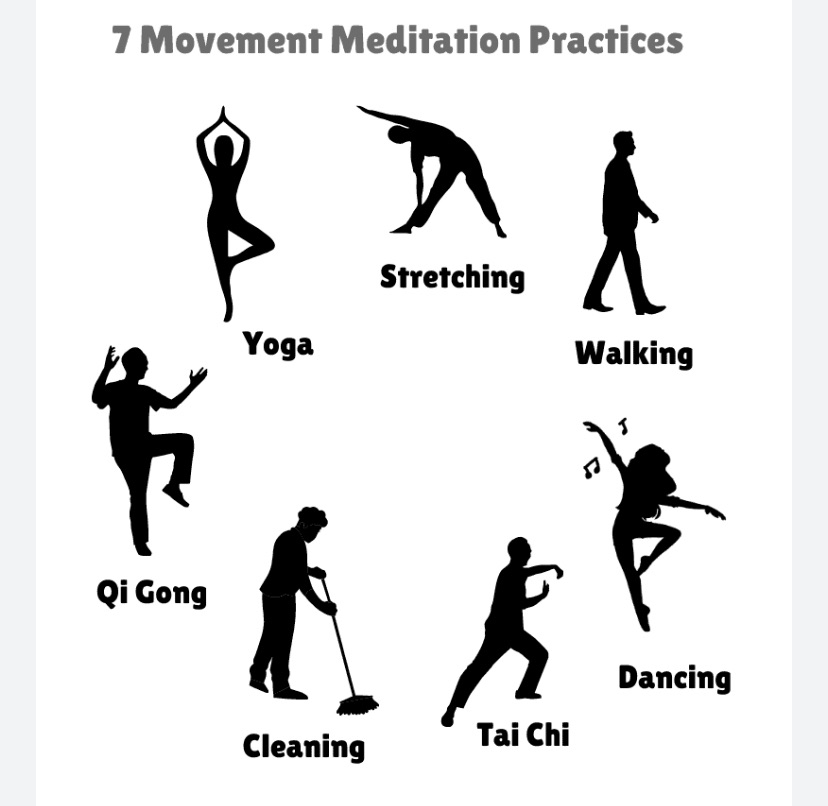
Movement meditations are something that we already know, they can be tai chi, yoga, even doing something therapeutic such as ironing, to cleaning the house. Meditation is just a name, meditation is actually what you make it. It is not the common ideal picture we have of sitting in an upright position, such as transcendence meditation, which I’ll go into later.
Transcendence, meditation, is the effortless meditation, which I actually do, which is effortless, and relaxed where you are not of the mind and of thoughts and completely immersed in your body and the present moment. This type of meditation is not for everyone. Some people may have an active mind, or have anxiety, or for many reasons, have an active mind which makes it difficult to do transcendence meditation. But that’s okay, because you have movement meditation.
Walking meditation, is one of them, It’s, where you are grounded in that present moment without talking, and just taking in the scenery, or the forest, or the park, this is still a meditation, this is enabling you to be mindful.
Some people ask how can walking be a meditation, as mentioned before meditation is a category, it is a word, but meditation can come in many different forms, and the good thing about it is that there are meditations for everyone.
The other forms of moving meditations, are tai chi, yoga, and that therapeutic ironing that we love to do, well for some of us. Qi Gong, is one of them also dancing, whatever brings you into that present moment whether you’re being mindful, or it takes your thinking away is still a meditation. Therefore, depending on what is needed for you at that present moment in your life, will determine what meditation is needed. As mentioned before, if the mind is active, that’s okay movement meditation is also there as a tool for you.
Depending on what movement meditation you are doing and if you want to go into a more still, relaxed meditation, movement meditation could be the prerequisite or the foundation to going into a deeper level of meditation. so you could start off with movement meditation, which is more active, and then maybe using music as a meditation as there are various forms of music that can take you into different states and then finally this could lead into the transcendence meditation, which is just you and your being.
So you could do mindful meditation, which helps you be more present, and bring your thoughts into this moment, and into what’s actually happening in your body and life, or you could use meditation for concentration to help you feel less distracted, you could use guided meditation to help assist you in your meditation, as well as using observation meditation to take you outside of yourself and concentrate and observe your thoughts and feelings in that way.
Movement meditation, overall is a great start to lead you onto any other meditation, depending on what you need, but just using movement meditation is enough to help you






 benucation.com