Blog

From Distress to Emotional Fitness

Emotional fitness is a fairly new term within the world of health and well-being. What it actually means is to be able to maintain, resolve, sustain and consistently find strength, when faced with challenges, stress, worry, and so forth.

The word is very similar to emotional wellness, emotional wellness again means the same thing, and also just being in a place, and having the skills to be resilient, on top of things, and knowing where to take yourself from one difficult situation to a place of resetting your nervous system and your logical mind and emotional body.

It is good to highlight, like any other person there are times when we don’t handle things well, we do become stressed or overwhelmed and that’s okay that’s all a part of life, but as you practice and observe yourself through the situations and circumstances you start to become more aware and you find, a map a inner map or compass to take you through the distressful events, whether that will be at work or in your personal life. It’s okay to not be okay though, sometimes we don’t have it all together and we’re not perfect. .

My emotional fitness levels are not the same as they were 20 years ago, and I’ve had significantly great people in my life that have guided me and provided sound mentorship to get to the place I am at today, I have gone back and forth throughout the years too. However, overall I’ve enjoyed the growth in the process. This is an important part to mention that to get to a level of emotional fitness, you have to enjoy self growth and self preservation in a sense, because that perspective will get you through the darkest times.

In the beginning, it may be difficult to sustain or remember, or utilise the information provided to yourself, or when you’re getting to know yourself and that can be difficult. However, finding what works uniquely for you is very helpful, knowing what you’re not as opposed to what you want to be, so that means understanding your capabilities, knowing your sensitivity levels, are key aspects of having a practical and productive level of skills in your life. When you are going through particular challenges in life, your mind, sometimes wants to already be at that place of peace and calm or in control which will then force you to want to speed up which would then create extra stress. Therefore, in this period what you ideally want to do is remember to take things slow and take things a day at a time, and really slow down the process, and again, this is one of the most difficult things to do, but it’s just something to be mindful of. This skill is having control of the thoughts and not the thoughts or feelings having control of you, basically not being too attached to the identity of the thoughts and feelings enough to observe them and then alter them.

So, whenever you are in a situation or circumstance, where you find yourself stressed, worried, unable to cope, it’s just being conscious, and mindful of how you are going to respond to the situation, and you don’t always get it right and sometimes you might have a laugh and think gosh, I didn’t do well this time, but that’s okay, that’s all part of developing and acquiring emotional fitness. To be honest it could take years to get to a level where you’re happy with your emotional fitness, wellness levels, I would never say it’s a speedy process but as the old saying goes it’s a journey not a destination and I know especially when something is painful or unpleasant you want things just to be okay and want to be in a better place which is natural.


What is Equanimity and how it helps stress

We all have a certain limit of stress that we can handle, especially if there are two or three situations or circumstances that are happening at one time. Maybe its unresolved stresses from the past or triggers that affect us.

Whatever stresses us, the first thing we need to do is learn our nervous system, how that functions what affects us from the past, present and future and working day by day with ourselves and understanding how we react in the world. When dealing with different stresses, it is key to test ourselves within these circumstances, being able to observe how we are feeling and reacting and responding. There are two sides to this. Sometimes it’s us blaming the outside experience, or it could be the case of us not mastering our own internal emotional world. Knowing which one it is, is up to us and it’s something that we can learn as we grow and mature.

You may read things about taking responsibility for every situation, however, I disagree, not everything falls on yourself, sometimes we need boundaries, we need respect, we need others to also take accountability for their actions, especially if it’s projection of oneself and their own emotional experiences. Indeed, we can get to a place where we understand, and master others around us, but that doesn’t mean that we should be taken for granted.

Equanimity is a state of being, calm, serene mind within the face of adversity, stress, chaos, and difficulties. I first came across this state of being when studying Buddhism. As I was dealing with anger as a young person within my 20s and early 30s, the state of Equanimity helped me immensely. It’s also called the act of non-self interference. Again, it’s not to be mistaken for apathy, meaning, no emotion, numb, not feeling things or being responsive.

It means to be able to manage your emotions in a good way, without self sabotaging and creating extra friction and conflict within yourself, when it comes to difficult experiences and people. It’s a practice that some people have innately or it can be learned over time. Enabling you to manage or deal with problems more effectively.

The beginning practice is to observe yourself throughout every interaction and conversation with others and yourself. How are you responding? Not judging yourself, it should be like this and that, that’s interfering. What you want to do is get to a state where you are neither for or against it. Letting it not take over you but moving towards it. This is not to be rushed it is to be tested and used until it flows through you naturally. It then becomes a new you. A new perspective, a new alternative, a new approach, a healthy relationship with yourself and the outside world in deep concentration but non attachment to.

Releasing blocked emotions to help move you forward

A lot of held or blocked emotions is due to not digesting the emotion around that previous circumstance. No matter how small or big, each emotion felt as a disturbance to you and your nervous system causes resentment

Let’s look at resentment it sounds like a serious emotion. Furthermore, resentment is such a talked about and current trend in the workplace with staff. Especially in the UK. Therefore, whether it’s resentments in the workplace or within your personal life it’s so important we look at them asap.

70% of our lives are spent at work. Within this time we may be doing work we felt is not for us or given outside our remit. Office politics, Burnout, sleep deprivation and organisational noise and poor leadership. These are to name a few.

These topics all build resentment. Frustrating emotions held on individuals or the organisation as a whole. Whatever the case, it’s looking at them from a internal perspective. This is the change. Sometimes changing the environment is essential but sometimes it’s just a change of perspective and digging deeper and digesting what has happened. This means skilfully processing what has happened and releasing the anger. We can always upkeep boundaries but sometimes injustice, lack of resources, disorder and disrespect happen everyday.

If we don’t digest what has happened and process it with compassion or understanding it will stay with us, eating away, holding on to our happiness and joy.

So, if this happens at work or in our personal lives we have to make peace with it no matter how painful or upsetting it is. We have to do it for us. This helps us not being bitter and trust me I’m no stranger to this in the pass. However, by working on the resentment over years I learnt that it can all disappear and give you a feeling of being free and regulating future disappointments.

Dropping the heavy burden

I remember anger being such a heavy emotion for me. I was holding it for 10years or more. At first I didn’t even know I was holding onto it. Luckily a colleague was brave enough to mention it to me after some time of knowing him. Even my closet friends saw it within me but never brought it up. It’s hard to address when you don’t know others will react. However what my colleague told me more importantly was that I affecting my loved ones

What happened in that moment of feedback, clarity, awareness was a deep reflection of how I was affecting others and myself. It was a start of surrendering and releasing this emotion that one I didn’t even know was affecting others but two was so powerful but yet subtle and quiet to my understanding. It felt like it was a part of my personality, it was what I was used to.

Now it took another 3-4 years to actually start seeing the release and surrender of this emotion. It was a journey of inner peace and compassion for my difficult pass. It was the reason why I called Benucation Benu. It felt that way. I felt like a new person. It wasn’t easy but I’m grateful for that one person who advised me unintentionally I guess. Once I unblocked that held and powerful emotion I could finally rest in myself enjoying the moments and dealing with other difficulties in a whole new way.

I noticed anger in others, the resentment that is built up over every interaction and disappointment and disrespect. Which again is all logical and normal. We have boundaries crossed and we have the right to be upset or frustrated. However, it’s what we do with it next which is fundamentally important. How long does it linger in the emotional body. How long do we hold grudges and judgement slowly making us serious and on edge.

Releasing the burden takes its own time. It can be long or short but there’s no rush to it no matter how much it hurts. It has to have its own timing to be processed properly within the body and the mind. Getting comfortable with the emotion, situation, and yourself

How do you really make things easy on yourself?

There’s always two ways to look at it, what are we fighting the external or the internal. Many people say things happen to you for a reason, to teach you lessons, which is true to an extent, however, if you don’t have the energy, and the mental capacity to be able to Regulate your emotions, see things in a different perspective and navigate through stress. Sometimes they won’t feel like a positive challenge, or something that you have to learn.

The important questions is, even if something is very toxic, is there still something to learn from it, I guess so? Sometimes if we feel that the stress or external force was uninvited, then it can feel exhausting. However, if it’s a case of irrational beliefs, beating yourself up, negative thinking, this is something that is also a journey, or something we have to learn about ourselves, especially through observation of our thoughts and behaviour. So how do we make it easier for ourselves in regards of a long term basis, basically where we build our emotional skills and explore our bodies to work for us not against us

So there are five stages, initially that you can look at to help you regardless if it’s an external battle or an internal one. These five stages, breakdown dynamics of emotions and the internal self. The first stage is called sensitivity, second is surrender or release. The third one is stillness, the forth one is stability and the fifth one is sustain.

Fundamentally sensitivity is looking at how you respond and process your emotions, the second one is to release stagnant feelings and emotions and finding what relaxes you and observing yourself, probably one of the hardest but essential skills to have. The third one is learning to ground your body, find calmness and relaxation on a continuous level, even through high levels of stress, then the next one is where you start to find composure and strength and the upkeep of the skills of your internal nervous system, mind and response to the outside world, and then finally sustaining all the other four and recycling these, and nurturing them, and then going back to the different stages when need be.

When your best is not good enough

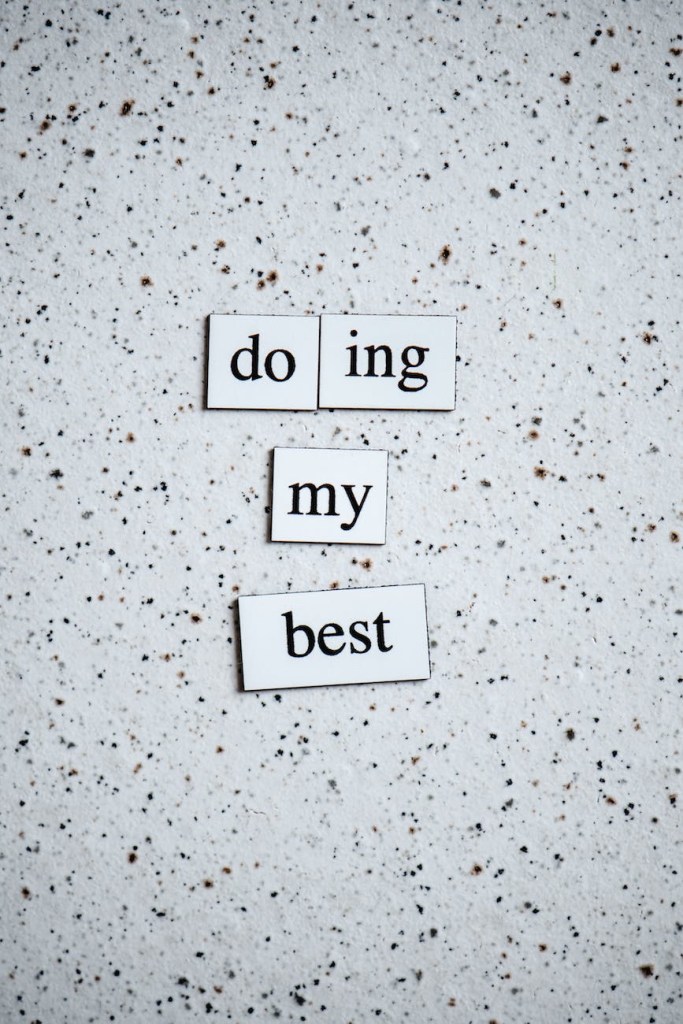
Sometimes, we are good when we want to be, and not when we need to be, what do I mean by this. You could feel that you’ve given your best, however, sometimes externally the validation or thoughts from others may not agree, I.E your manager etc, or internally your own thoughts, but it is important to remember that what you give at that moment is all you can give. Yes, there can be areas I’m sure improvement is needed and anyone that sees that in you will nurture that and you will see that in yourself at some point. But you should not feel guilty for not doing better when your giving all you got

There is more critical talk on improving than enjoying the process. There is more frustrating conversations around people not meeting the end result plus not being met quick enough as opposed to the joy of the journey and what we can do done better as a collective.

If you feel you could have done better and you still learnt for the mistake, error or shortcoming then it’s all good. No problem there. Delivering your best can change in certain periods in your life. You could be consistent then one phase you may not be. That’s ok. If your energy levels, interest or enthusiasm change over time then that’s ok. That’s organic. That’s realistic and healthy. No amount of pressure should be applied. Just being aware of it is enough. One day you might go back to consistency but it shouldn’t be the goal.

We are already enough, we are at our best even when we don’t deliver. Like my great auntie said. If you got then give, but if you don’t have it don’t give it. Don’t overdo!

Using your gift of sensitivity

It is often said that being sensitive is a weakness, can confuse you and sometimes make rushed and bad decisions which is true to an extent, however sensitivity is actually a gift. When we learn more about our sensitivity levels which are different for everyone we are able to use them in a constructive way. Never feel that your sensitivity responses are negative. They just need fine-tuning.

They say there’s a percentage of people that are overly sensitive, and respond to life with a negative perception, they call this neuroticism. Neuroticism is one of the five personality traits of the population. However, these are not all bad, it’s the labels society give and the way these traits are interpreted, which in turn create a certain language that sounds like these percentage of people are all doom and gloom. However, this is not the case.

Being responsive, receptive, empathetic, and more in tune and aligned with your nervous system, and your emotional undercurrent’s is a gift

Sometimes you may feel that it’s too much mentally or physically but over time once you nurture and understand more of yourself, you would find that the sensitivity levels you have are just right. They just need to be understood, and worked with

Why stillness is fundamental to emotional wellness

We hear a lot of talk around prevention in terms of looking after yourself with self care and seeking help at the early stages of low mood and mild depression. However, even though these are helpful, in getting better here I want to look at what helps you staying better and furthermore being in a position to deal with future emotional challenges

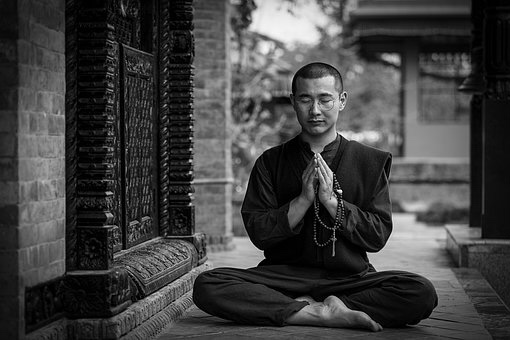
It’s called learning the art of stillness (equanimity). What is stillness, stillness isn’t non movement or action. It means to deal or take action on something in a relaxed way. It’s the body being balanced and relaxed to deal with whatever is happening. This is more a mental state, where the mind is clear it is balanced and you have control of what is affecting and forcing you. It’s being at such a pace that your body can manage and have a great level of flexibility

Again, this is not perfection. It’s not apathy. There will be times when you will feel not comfortable or negative which is normal. However, intentionally creating a still mind allows you to zone in on a problem productively. It allows your bodies response to be in time of the situation or challenge. It creates a psychological safe mind. Filtering and overseeing things that is easy for you

It puts your thoughts into perspective. It allows observation detachment from compulsive thoughts and actions. It creates a sustainable mind. One that works for you not against you. Sometimes even the worst of times can help you to seek stillness. It’s such a powerful insight to have. It is the best preventer to emotional and mental distress.

To apply it will be easy once you find what works for your body. What allows you space?. Once you calm the nervous system you can start to work with internal insight and behaviours which will take you on a fun journey of self.

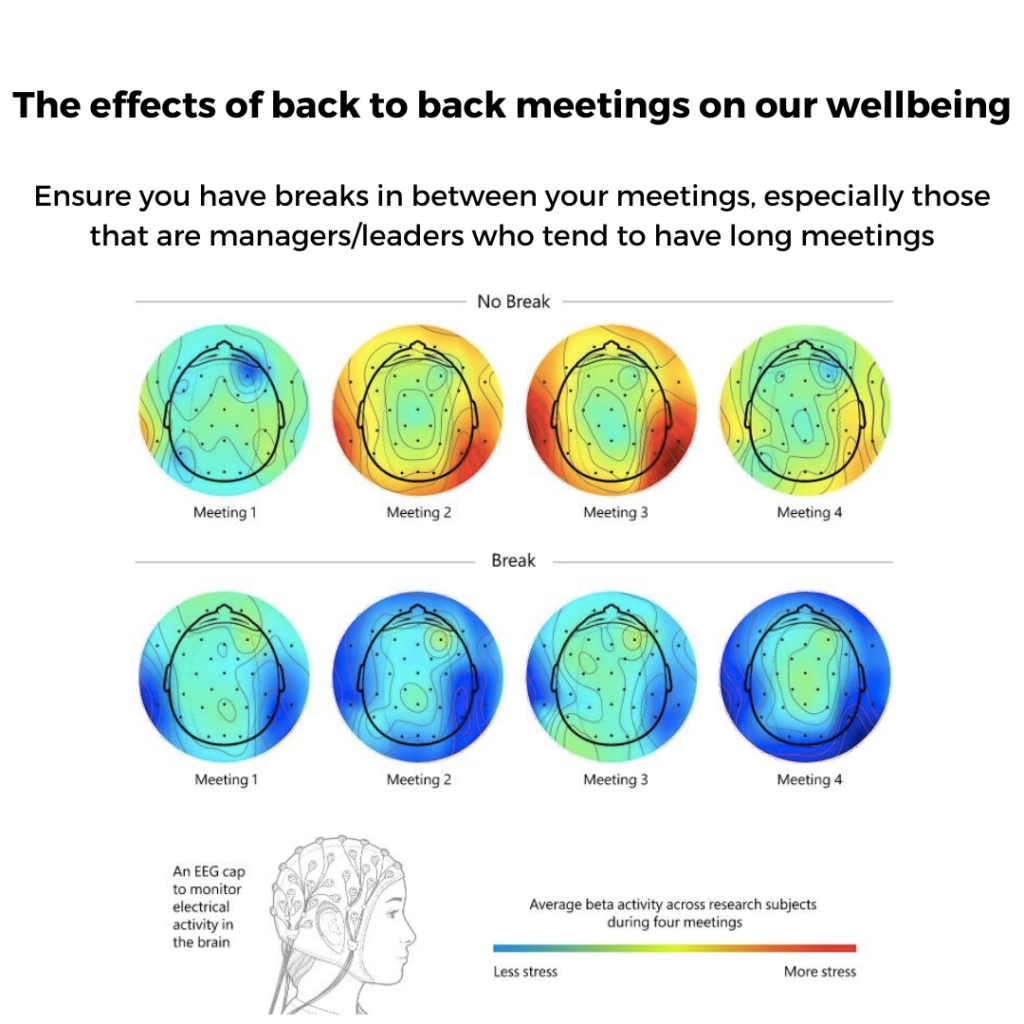
The effect of having back to back meetings on our wellbeing

Over the last few years, with a lot of jobs now going virtual, and working from home and with the raise of Zoom and Microsoft teams. It has created more and more meetings that are now back to back, especially for anyone in a leadership, management role. Don’t get me wrong virtual communication platforms are amazing. However, we need to be more conscious of the time we spend on them.

A number of staff predominately management have made complaints in regards to the length of meetings and having meetings that are back to back without the chance of having breaks. Staff now are more comfortable with the term I’mhaving a ‘working lunch’ which is becoming a norm. However, this working lunch is not healthy at all. We need dedicated time and space to come away from work. Sometimes staff are so engrossed in working to deadlines and timeframes, they are afraid to take a lunch break, even if it’s for 30mins, and we know how fast 30mins can go when having lunch. By the time you take your phone out and have a nibble it’s time to go back to work. However its important you take this break.  

Its self-care week this week in November and I’ve been encouraging staff to take that time away from the workstation. It’s essential we come away from work and have the break we deserve. The work will always be there, but it’s like we are programmed that we don’t have enough time in the day. Don’t get me wrong I am no stranger to this, and after a burnout I realised for once how fast we are working. We have to make our breaks a priority. We have to demand them at work and promote your self-care break time at work. Management tend to mention to me that there isn’t enough time in the day, I’venever understood this concept as you always have the next day if things are not complete. Furthermore if they are not complete it’s a process of time management, and I don’t mean working after work hours. 

It’s going to need you being selfish with your time, placing boundaries and looking at your capacities at work. Being honest with work and not feeling ashamed or pressured by work to deliver when you actually need a break. The amount of stress this causes in the long run is dangerous to our wellbeing. Since its self-care week let’s start this month to slow down and think more proactively in regards to our meetings.

The importance of understanding Neurodiversity

Neurodivergence amongst people has come up a lot this week, working with occupational health and learning and development teams in healthcare and clients from both the 3rd sector and public sector. People whether they are on the frontline working, or backend support/business services. It’s so important that the conversation on neurodivergence is spoken about. Neurodivergence is the disability with reading, numbers, coordination, and includes names like ADHD, Autism, etc.

One of the most important factors that came out of the conversations and dialogue was whether someone was actually diagnosed with one of these disabilities or was it a case of lack of education. Lack of supportive education in various forms is no bodies fault. There are many reasons to why people do not have the access to a good education. However, by looking at this fact, many people can feel that they are disabled, or that struggling with reading, writing or digital literacy is disabling them. It’s a fact that the difference in are minds response to different information can affect our emotional wellbeing. Furthermore, it may discourage some of us to not go forward in different areas of our working lives. It can be distressing to want to move forward but the system or workplace you work in does not recognise or support the idea of the difference in neurodivergence or deprivation in education and understanding the difference in these. Understanding if someone is neurodivergent is one thing, but knowing if our education as a child or young adult wasn’t the easiest or even if we had a good one is another. How do we have these open conversations in regards to the skill sets we have.

Is it rude to ask about our level of literacy and did our pass learning play a big part of our development of learning. Having open discussions and honest views on this will help leaders and other team colleagues understand are capacities and where we would need support to learn. One of the solutions that came up was training staff on how to learn and focus. There is a brilliant book by Benedict Carey called How We Learn.

Sometimes we ourselves can find it difficult with how we process information. We all have different minds and are unique, with having strengths and weaknesses in different areas. Accepting our strengths and weaknesses are key to moving beyond what holds as back. It’s never too late to start to learn how to learn regardless of your educational background. If you fall into one of the neurodivergent paths it’s also possible to find new ways to learn.

Overall, our conversations concluded in the fact that it doesn’t really matter what you can grasp or what you can’t, what matters most is that you have a supportive and understanding workforce that gives you time and space to do the work at your pace and learn at your pace regardless of the outcomes, goals and targets. This is inclusion at its best, knowing that we all are different, we have disabilities and also seeing that some of us never had the opportunity to learn in a good school, or be nurtured by our guardians in how to learn, which again may not be their fault or neglect, this could just be a lack of time and knowing how to teach themselves.